Sunday, March 10, 2013

"Black Citymakers"

New from Oxford University Press: Black Citymakers: How "The Philadelphia Negro" Changed Urban America by Marcus Anthony Hunter.

About the book, from the publisher:
W.E.B. DuBois immortalized Philadelphia's Black Seventh Ward neighborhood, one of America's oldest urban black communities, in his 1899 sociological study The Philadelphia Negro. In the century after DuBois's study, however, the district has been transformed into a largely white upper middle class neighborhood.

Black Citymakers revisits the Black Seventh Ward, documenting a century of banking and tenement collapses, housing activism, black-led anti-urban renewal mobilization, and post-Civil Rights political change from the perspective of the Black Seventh Warders. Drawing on historical, political, and sociological research, Marcus Hunter argues that black Philadelphians were by no means mere casualties of the large scale social and political changes that altered urban dynamics across the nation after World War II. Instead, Hunter shows that black Americans framed their own understandings of urban social change, forging dynamic inter- and intra-racial alliances that allowed them to shape their own migration from the old Black Seventh Ward to emergent black urban enclaves throughout Philadelphia. These Philadelphians were not victims forced from their homes - they were citymakers and agents of urban change.

Black Citymakers explores a century of socioeconomic, cultural, and political history in the Black Seventh Ward, creating a new understanding of the political agency of black residents, leaders and activists in twentieth century urban change.

Saturday, March 9, 2013

"Soldier, Sailor, Beggarman, Thief"

New from Oxford University Press: Soldier, Sailor, Beggarman, Thief: Crime and the British Armed Services since 1914 by Clive Emsley.

About the book, from the publisher:
The belief that crime declines at the beginning of major wars, as young men are drawn into the armed forces, and increases with the restoration of peace, as brutalised veterans are released on to a labour market reorganising for peace, has a long pedigree in Britain. But it has rarely been examined critically and scarcely at all for the period of the two world wars of the twentieth century. This is the first serious investigation of criminal offending by members of the British armed forces both during and immediately after these wars. Its particular focus is the two world wars but, recognising the concerns and the problems voiced in recent years about veterans of the Falklands, the Gulf wars, and the campaign in Afghanistan, Clive Emsley concludes his narrative in the present.
Clive Emsley was educated at the University of York and at Peterhouse, Cambridge, and has taught and held visiting fellowships in Australia, Canada, France, and New Zealand. He has published widely on the history of crime and policing, including Crime and Society in England 1750-1900 (now in its fourth edition), Crime and Society in Twentieth-Century England and The Great British Bobby: A History of British Policing from the 18th Century to the Present. He was president of the International Association for the History of Crime and Criminal Justice for ten years.

Friday, March 8, 2013

"America Bewitched"

New from Oxford University Press: America Bewitched: Witchcraft After Salem by Owen Davies.

About the book, from the publisher:
The infamous Salem witch trials of 1692 are etched into the consciousness of America. Nineteen people executed, one tortured to death, four others perished in jail--the tragic toll of Salem remains a powerful symbol of the dangers of intolerance and persecution. As time passed, the trials were seen as a milepost measuring the distance America had progressed from its benighted past. Yet the story of witchcraft did not end in Salem. As Owen Davies shows in America Bewitched, a new, long, and chilling chapter was about to begin.

Davies, an authority on witches and the supernatural, reveals how witchcraft in post-Salem America was not just a matter of scary fire-side tales, Halloween legends, and superstitions: it continued to be a matter of life and death. If anything, witchcraft disputes multiplied as hundreds of thousands of immigrants poured into North America, people for whom witchcraft was still a heinous crime. Davies tells the story of countless murders and many other personal tragedies that resulted from accusations of witchcraft among European Americans-as well as in Native American and African American communities. He describes, for instance, the impact of this belief on Native Americans, as colonists-from Anglo-American settlers to Spanish missionaries-saw Indian medicine men as the Devil's agents, potent workers of malign magic. But Davies also reveals that seventeenth-century Iroquois--faced with decimating, mysterious diseases--accused Jesuits of being plague-spreading witches. Indeed, the book shows how different American groups shaped each other's languages and beliefs, sharing not only our positive cultural traits, but our fears and weaknesses as well.

America Bewitched is the first book to open a window on this fascinating topic, conjuring up new insights into popular American beliefs, the immigrant experience, racial attitudes, and the development of modern society.
Also see Davies' five best list of books on magic in an earlier America and top ten list of grimoires.

The Page 99 Test: Grimoires: A History of Magic Books by Owen Davies.

Thursday, March 7, 2013

"Darwin Deleted"

New from the University of Chicago Press: Darwin Deleted: Imagining a World without Darwin by Peter J. Bowler.

About the book, from the publisher:
The ideas and terminology of Darwinism are so pervasive these days that it seems impossible to avoid them, let alone imagine a world without them. But in this remarkable rethinking of scientific history, Peter J. Bowler does just that. He asks: What if Charles Darwin had not returned from the voyage of the Beagle and thus did not write On the Origin of Species? Would someone else, such as Alfred Russel Wallace, have published the selection theory and initiated a similar transformation? Or would the absence of Darwin’s book have led to a different sequence of events, in which biology developed along a track that did not precipitate a great debate about the impact of evolutionism? Would there have been anything equivalent to social Darwinism, and if so would the alternatives have been less pernicious and misappropriated?

In Darwin Deleted, Bowler argues that no one else, not even Wallace, was in a position to duplicate Darwin’s complete theory of evolution by natural selection. Evolutionary biology would almost certainly have emerged, but through alternative theories, which were frequently promoted by scientists, religious thinkers, and moralists who feared the implications of natural selection. Because non-Darwinian elements of evolutionism flourished for a time in the real world, it is possible to plausibly imagine how they might have developed, particularly if the theory of natural selection had not emerged until decades after the acceptance of the basic idea of evolution. Bowler’s unique approach enables him to clearly explain the non-Darwinian tradition—and in doing so, he reveals how the reception of Darwinism was historically contingent. By taking Darwin out of the equation, Bowler is able to fully elucidate the ideas of other scientists, such as Richard Owen and Thomas Huxley, whose work has often been misunderstood because of their distinctive responses to Darwin.

Darwin Deleted boldly offers a new vision of scientific history. It is one where the sequence of discovery and development would have been very different and would have led to an alternative understanding of the relationship between evolution, heredity, and the environment—and, most significantly, a less contentious relationship between science and religion. Far from mere speculation, this fascinating and compelling book forces us to reexamine the preconceptions that underlie many of the current controversies about the impact of evolutionism. It shows how contingent circumstances surrounding the publication of On the Origin of Species polarized attitudes in ways that still shape the conversation today.

Wednesday, March 6, 2013

"One Nation Under Stress"

New from Oxford University Press: One Nation Under Stress: The Trouble with Stress as an Idea by Dana Becker.

About the book, from the publisher:
Stress. Everyone is talking about it, suffering from it, trying desperately to manage it-now more than ever. From 1970 to 1980, 2,326 academic articles appeared with the word "stress" in the title. In the decade between 2000 and 2010 that number jumped to 21,750. Has life become ten times more stressful, or is it the stress concept itself that has grown exponentially over the past 40 years?

In One Nation Under Stress, Dana Becker argues that our national infatuation with the therapeutic culture has created a middle-class moral imperative to manage the tensions of daily life by turning inward, ignoring the social and political realities that underlie those tensions. Becker shows that although stress is often associated with conditions over which people have little control-workplace policies unfavorable to family life, increasing economic inequality, war in the age of terrorism-the stress concept focuses most of our attention on how individuals react to stress. A proliferation of self-help books and dire medical warnings about the negative effects of stress on our physical and emotional health all place the responsibility for alleviating stress-though yoga, deep breathing, better diet, etc.-squarely on the individual. The stress concept has come of age in a period of tectonic social and political shifts. Nevertheless, we persist in the all-American belief that we can meet these changes by re-engineering ourselves rather than tackling the root causes of stress.

Examining both research and popular representations of stress in cultural terms, Becker traces the evolution of the social uses of the stress concept as it has been transformed into an all-purpose vehicle for defining, expressing, and containing middle-class anxieties about upheavals in American society.

Tuesday, March 5, 2013

"Picking Up"

New from Farrar, Straus and Giroux: Picking Up: On the Streets and Behind the Trucks with the Sanitation Workers of New York City by Robin Nagle.

About the book, from the publisher:
America’s largest city generates garbage in torrents—11,000 tons from households each day on average. But New Yorkers don’t give it much attention. They leave their trash on the curb or drop it in a litter basket, and promptly forget about it. And why not? On a schedule so regular you could almost set your watch by it, someone always comes to take it away.

But who, exactly, is that someone? And why is he—or she—so unknown?

In Picking Up, the anthropologist Robin Nagle introduces us to the men and women of New York City’s Department of Sanitation and makes clear why this small army of uniformed workers is the most important labor force on the streets. Seeking to understand every aspect of the Department’s mission, Nagle accompanied crews on their routes, questioned supervisors and commissioners, and listened to story after story about blizzards, hazardous wastes, and the insults of everyday New Yorkers. But the more time she spent with the DSNY, the more Nagle realized that observing wasn’t quite enough—so she joined the force herself. Driving the hulking trucks, she obtained an insider’s perspective on the complex kinships, arcane rules, and obscure lingo unique to the realm of sanitation workers.

Nagle chronicles New York City’s four-hundred-year struggle with trash, and traces the city’s waste-management efforts from a time when filth overwhelmed the streets to the far more rigorous practices of today, when the Big Apple is as clean as it’s ever been.

Throughout, Nagle reveals the many unexpected ways in which sanitation workers stand between our seemingly well-ordered lives and the sea of refuse that would otherwise overwhelm us. In the process, she changes the way we understand cities—and ourselves within them.

Monday, March 4, 2013

"Family Secrets"

New from Oxford University Press: Family Secrets: Shame and Privacy in Modern Britain by Deborah Cohen.

About the book, from the publisher:
We live today in a culture of full disclosure, where tell-all memoirs top the best-seller lists, transparency is lauded, and privacy seems imperiled. But how did we get here?

Exploring scores of previously sealed records, Family Secrets offers a sweeping account of how shame--and the relationship between secrecy and openness--has changed over the last two centuries in Britain. Deborah Cohen uses detailed sketches of individual families as the basis for comparing different sorts of social stigma. She takes readers inside an Edinburgh town house, where a genteel maiden frets with her brother over their niece's downy upper lip, a darkening shadow that might betray the girl's Eurasian heritage; to a Liverpool railway platform, where a heartbroken mother hands over her eight-year old illegitimate son for adoption; to a town in the Cotswolds, where a queer vicar brings to his bank vault a diary--sewed up in calico, wrapped in parchment--that chronicles his sexual longings. Cohen explores what families in the past chose to keep secret and why. She excavates the tangled history of privacy and secrecy to explain why privacy is now viewed as a hallowed right while secrets are condemned as destructive.

In delving into the dynamics of shame and guilt, Family Secrets explores the part that families, so often regarded as the agents of repression, have played in the transformation of social mores from the Victorian era to the present day. Written with compassion and keen insight, this is a bold new argument about the sea-changes that took place behind closed doors.
Visit Deborah Cohen's website.

Sunday, March 3, 2013

"Stalin's Curse"

New from Knopf: Stalin's Curse: Battling for Communism in War and Cold War by Robert Gellately.

About the book, from the publisher:
A chilling, riveting account based on newly released Russian documentation that reveals Joseph Stalin’s true motives—and the extent of his enduring commitment to expanding the Soviet empire—during the years in which he seemingly collaborated with Franklin D. Roosevelt, Winston Churchill, and the capitalist West.

At the Big Three conferences of World War II, Stalin persuasively played the role of a great world leader. Even astute observers like George F. Kennan concluded that the United States and Great Britain should view Stalin as a modern-day tsarist-like figure whose primary concerns lay in international strategy and power politics, not in ideology. Now Robert Gellately uses recently uncovered documents to make clear that, in fact, the dictator was an unwavering revolutionary merely biding his time, determined as ever to establish Communist regimes across Europe and beyond, and that his actions during these years (and the poorly calculated Western responses) set in motion what would eventually become the Cold War. Gellately takes us behind the scenes. We see the dictator disguising his political ambitions and prioritizing the future of Communism, even as he pursued the war against Hitler. Along the way, the ascetic dictator’s Machiavellian moves and bouts of irrationality kept the Western leaders on their toes, in a world that became more dangerous and divided year by year.

Exciting, deeply engaging, and shrewdly perceptive, Stalin’s Curse is an unprecedented revelation of the sinister machinations of the Soviet dictator.
Writers Read: Robert Gellately (July 2008).

Saturday, March 2, 2013

"Democracy in Retreat"

New from Yale University Press: Democracy in Retreat: The Revolt of the Middle Class and the Worldwide Decline of Representative Government by Joshua Kurlantzick.

About the book, from the publisher:
Since the end of the Cold War, the assumption among most political theorists has been that as nations develop economically, they will also become more democratic—especially if a vibrant middle class takes root. This assumption underlies the expansion of the European Union and much of American foreign policy, bolstered by such examples as South Korea, the Philippines, Taiwan, and even to some extent Russia. Where democratization has failed or retreated, aberrant conditions take the blame: Islamism, authoritarian Chinese influence, or perhaps the rise of local autocrats. But what if the failures of democracy are not exceptions? In this thought-provoking study of democratization, Joshua Kurlantzick proposes that the spate of retreating democracies, one after another over the past two decades, is not just a series of exceptions. Instead, it reflects a new and disturbing trend: democracy in worldwide decline. The author investigates the state of democracy in a variety of countries, why the middle class has turned against democracy in some cases, and whether the decline in global democratization is reversible.
The Page 69 Test: Joshua Kurlantzick's Charm Offensive.

Friday, March 1, 2013

"American Umpire"

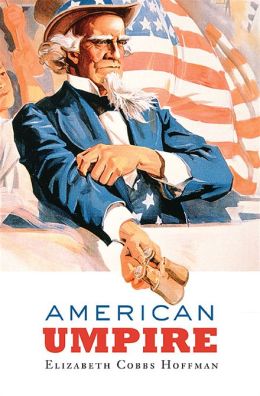
New from Harvard University Press: American Umpire: The New Rules of World Order, 1776 to the Present by Elizabeth Cobbs Hoffman.

About the book, from the publisher:
Commentators frequently call the United States an empire: occasionally a benign empire, sometimes an empire in denial, and often a destructive empire. Elizabeth Cobbs Hoffman asserts instead that, because of its unusual federal structure, America has performed the role of umpire since 1776, compelling adherence to rules that gradually earned collective approval.

This provocative reinterpretation traces America’s role in the world from the days of George Washington, Abraham Lincoln, and Franklin D. Roosevelt to the present. Cobbs Hoffman argues that the United States has been the pivot of a transformation that began outside its borders and before its founding, in which nation-states replaced the empires that had dominated history. The “Western” values that America is often accused of imposing were, in fact, the result of this global shift. American Umpire explores the rise of three values—access to opportunity, arbitration of disputes, and transparency in government and business—and finds that the United States is distinctive not in its embrace of these practices but in its willingness to persuade and even coerce others to comply. But America’s leadership is problematic as well as potent. The nation has both upheld and violated the rules. Taking sides in explosive disputes imposes significant financial and psychic costs. By definition, umpires cannot win.

American Umpire offers a powerful new framework for reassessing the country’s role over the past 250 years. Amid urgent questions about future choices, this book asks who, if not the United States, might enforce these new rules of world order?
View the trailer for American Umpire.